
How to Keep Pipes From Freezing in a North Texas Hard Freeze
Why North Texas Architecture Is Uniquely Vulnerable to Freezes
Unlike homes in northern states built with basements and deeply buried water lines, homes in Lewisville, The Colony, and Carrollton are built on slab-on-grade concrete foundations. Builders routed fresh water distribution lines through unconditioned attic spaces directly beneath drafty roof decking.
When an Arctic cold front sweeps down from the plains, attic temperatures can plummet to single digits within hours. Standard fiberglass blown-in insulation often leaves water pipes exposed along soffit vents and gable ends, creating prime conditions for ice damming and pipe expansion.
The Correct Drip Protocol: Hot vs. Cold Lines
Many homeowners believe dripping a single faucet is sufficient. However, your home has two entirely separate distribution piping systems: cold water lines and hot water lines.
During sustained sub-freezing weather (below 28°F), you must drip both the hot and cold sides of faucets located on exterior walls or served by attic pipes. The drip should be a steady trickle about the width of a pencil lead, not an occasional drop. Moving water prevents ice crystals from bridging the pipe diameter, and keeping the faucet open provides a pressure relief path if ice does begin to form.
Cabinet Doors, Garage Doors, and Hose Bib Winterization
Pipes located beneath kitchen sinks and bathroom vanities on exterior walls are shielded from ambient room heat by closed cabinet doors. Open these cabinet doors during freeze events to allow warm air to circulate around P-traps and supply risers.
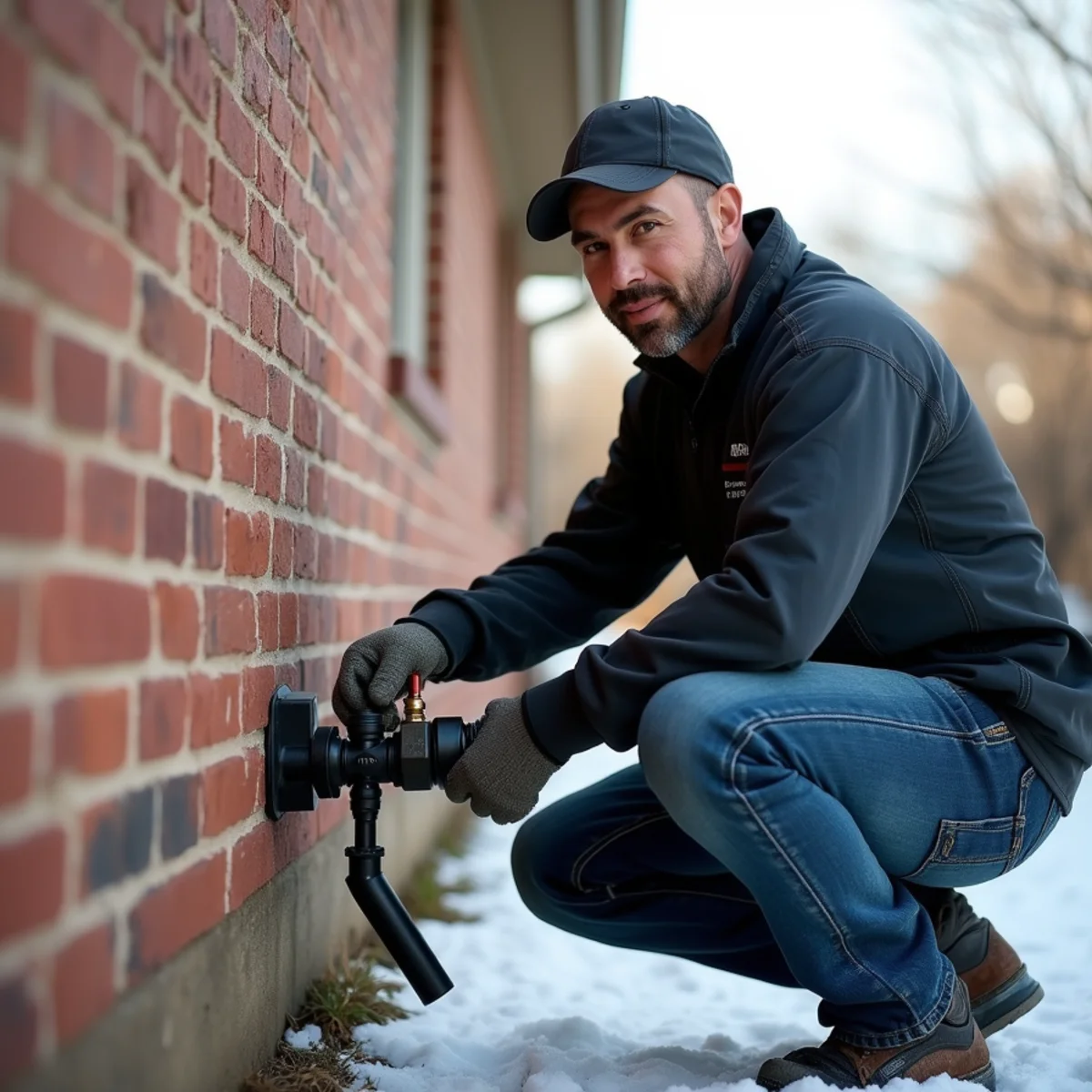
Disconnect all garden hoses from exterior hose bibs before the first freeze. Leaving a hose attached prevents the internal anti-siphon valve from draining, trapping water that ruptures the brass casting inside your wall. Cover all exterior faucets with insulated dome covers.
What to Do If Water Stops Running During a Freeze
If you turn on a faucet during a freezing morning and nothing comes out, your line is frozen. Immediately leave the faucet in the open position. Locate your main water shut-off valve so you are prepared the moment the pipe thaws, as ruptures often reveal themselves during thawing.
Never apply an open flame or torch to frozen pipes. Use a hair dryer or wrap the exposed pipe with warm towels. If the freeze is in an inaccessible attic space, call Lewisville Rapid Plumbers at (858) 363-8298 for emergency thermal thawing.
Master Plumber Insight: Why Tankless Units and Attic Recirculation Loops Freeze First
Many Denton County homeowners who upgraded to high-efficiency tankless water heaters assume their units are immune to freezes because they don't store 50 gallons of water. In reality, tankless units feature delicate copper heat exchanger coils containing thin tubes that freeze and split in as little as two hours when exposed to sub-20°F temperatures.
While modern tankless water heaters include internal ceramic electric heating elements to prevent freezing, these elements depend entirely on grid electricity. During winter storms with electrical power outages (like Winter Storm Uri), these units have zero freeze protection. Master plumbers recommend installing an automatic mechanical freeze drain valve on exterior or attic tankless installations or manually opening the lower water purge drain plugs to evacuate the heat exchanger if a blackout occurs during freezing conditions.
Related Services & Local Areas Mentioned in This Guide:
- Burst and frozen pipe repair Lewisville — Our technicians provide 24/7 winter freeze emergency pipe repairs.
- Water heater repair & freeze protection — Prevent attic tank rupture and winter tankless heat exchanger failure.
- Lewisville plumbing inspection & winterization — Ensure main shut-off valves and outdoor hose bibs are fully winterized.
- The Colony plumbing services — Serving lakeside properties and Fox & Jacobs tract homes in The Colony.
- Carrollton plumbing repairs — Winterization and freeze protection across Carrollton neighborhoods.
Frequently Asked Questions
At what temperature do pipes freeze in Lewisville?↓
Does running the swimming pool pump protect pool plumbing?↓
Why does a pipe often start leaking during thawing rather than while frozen solid?↓
Should I leave my heating thermostat higher if I leave town during a North Texas freeze?↓
Need Immediate Professional Plumbing Help in Lewisville?
Our licensed Texas plumbers are standing by 24 hours a day, 7 days a week. Upfront itemized pricing on every job.